Branded careers & applicant tracking

Bring every application into a connected hiring workflow.

Give candidates a branded starting point and give reviewers the role context, screening evidence, and next actions to keep each application moving.

Explore a prepared example. Sharing your own workflow is optional.

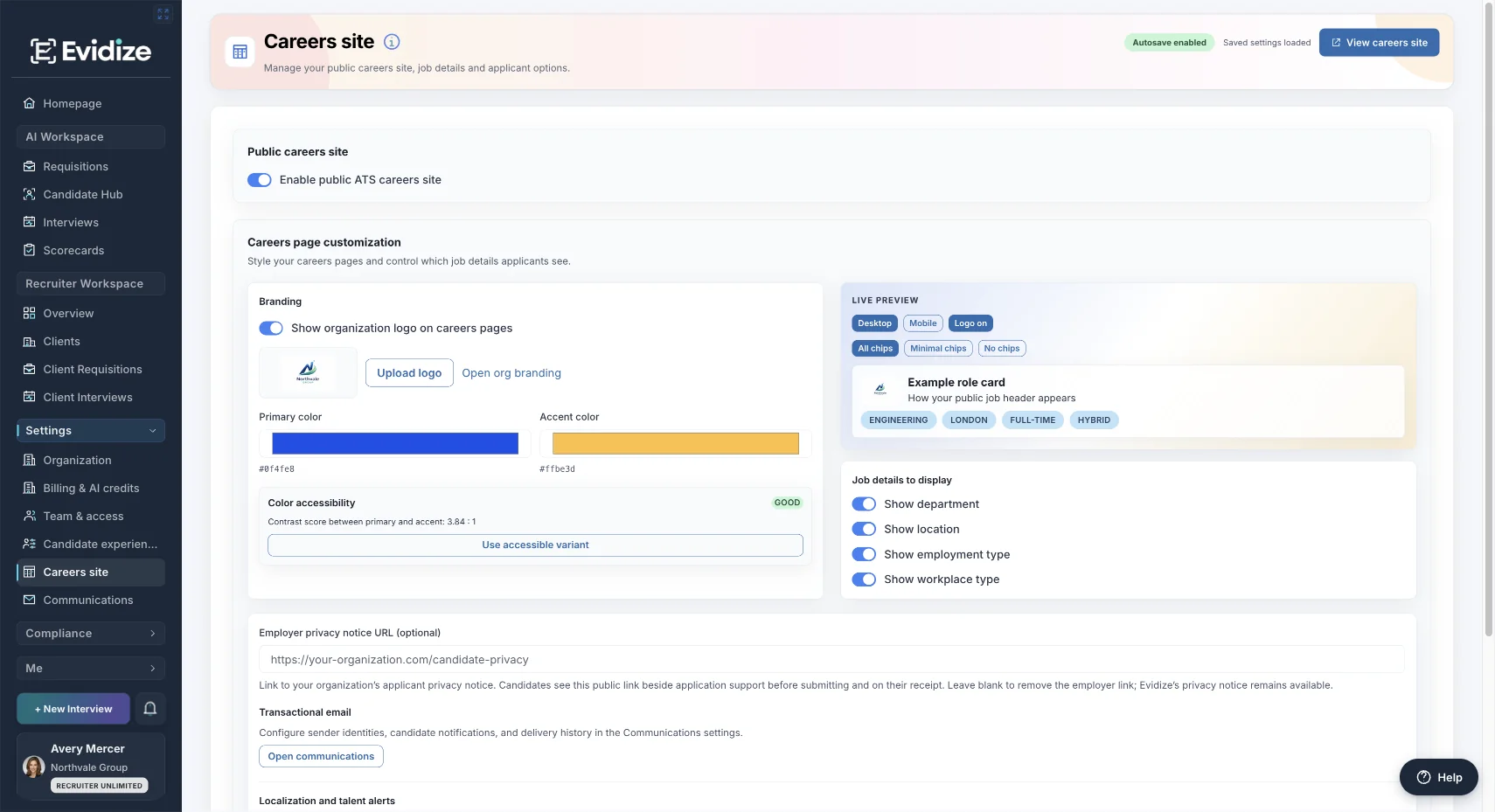
Live careers preview with organization branding and department, location, employment-type, and workplace labels
Open full-size product image
Actual careers-settings preview in the Northvale demo workspace. Review how role details appear before publishing.

The preview connects your organization brand with the role details candidates will see.

One applicant workflow

Connect careers, screening, review, and follow-through.

These product views show how a team configures intake and reviews applicants. Your team remains responsible for publication, candidate communication, and progression decisions.

The examples below use demonstration data. Controls depend on role, plan, and setup.

02 · Intake

Ask for evidence relevant to this role.

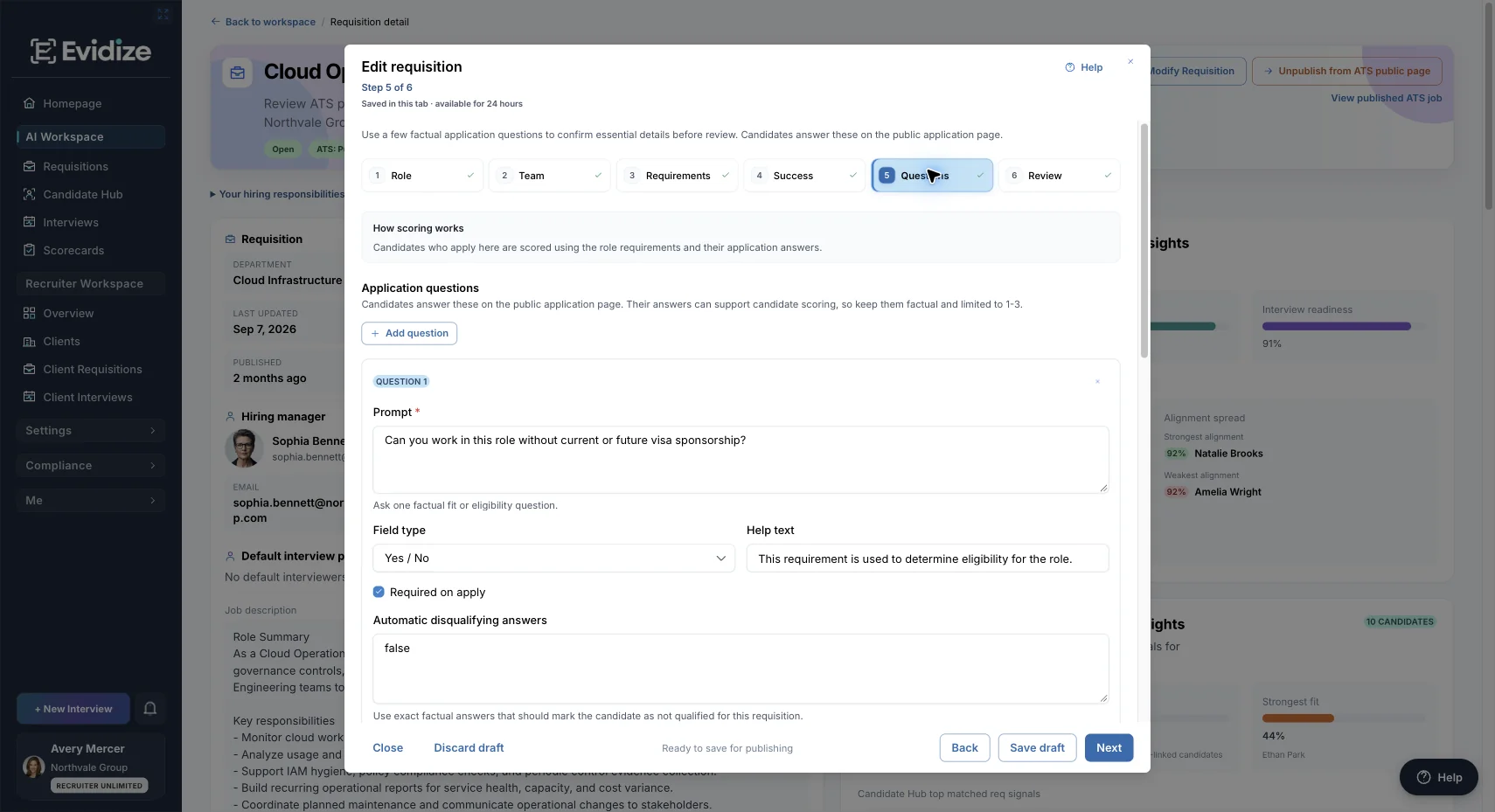
Use requisition-specific screening questions and required-answer settings to collect the context your reviewers need alongside the résumé.

What to check: This example uses a Yes / No answer and requires it on application. Questions are optional and configured separately for each role.
An application question configured as Yes / No with Required on apply selected
Open full-size product image
A focused view of the question’s answer type and required-answer setting. Open the full screenshot for the surrounding requisition.

03 · Review

Review fit, stage, and the next step together.

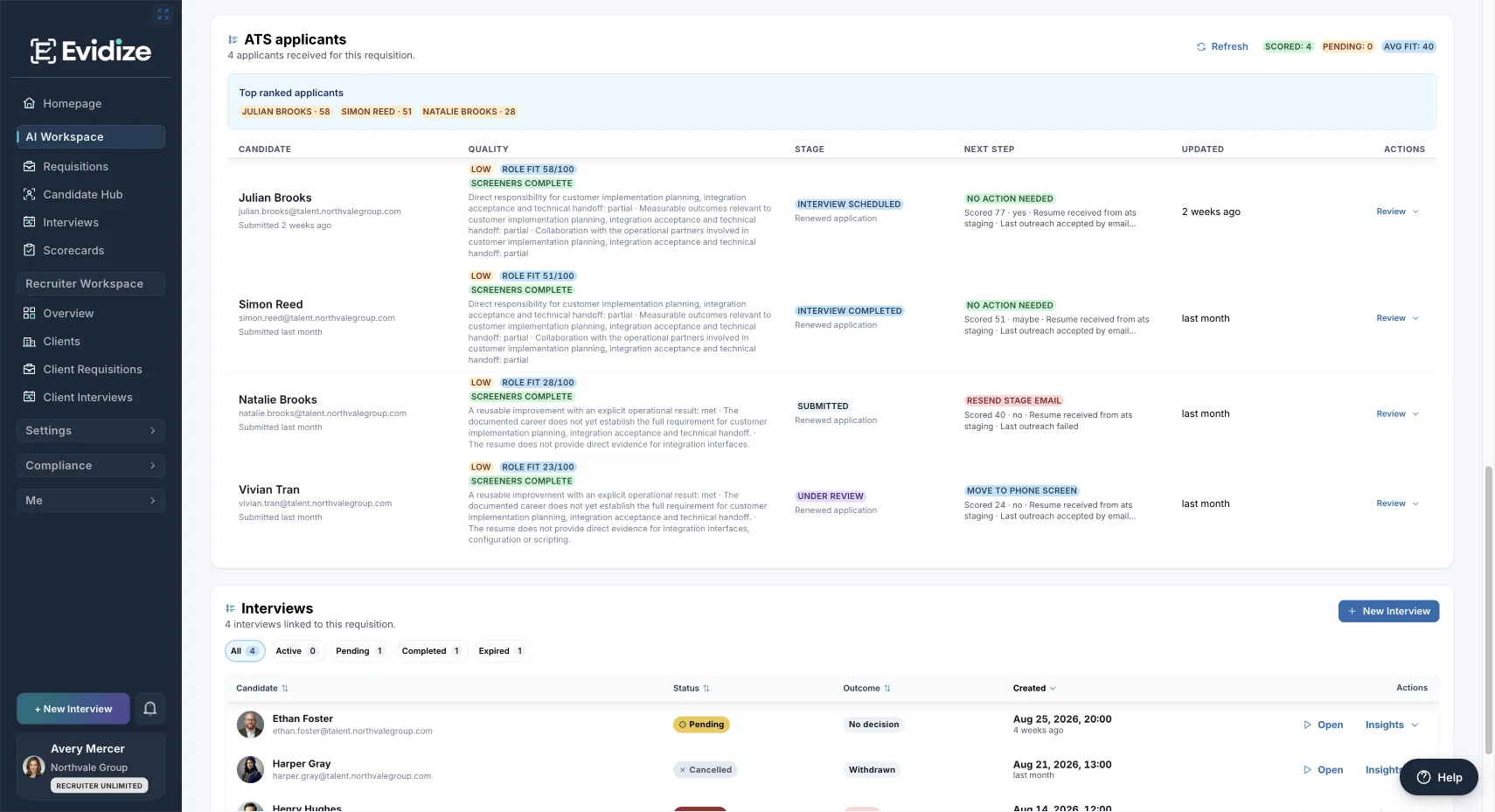
The applicant table connects each person with role-fit evidence, screening status, current stage, and a reviewer-owned next step.

What to check: Completed screening is not the same as demonstrated ability. Read the written evidence, check gaps, and choose the next stage yourself.
Applicant-quality evidence showing role fit 58/100, completed screeners, and a written explanation of partial requirements
Open full-size product image
Julian’s demonstration record shows completed screeners alongside partial role evidence. These values are example data, not hiring results.

04 · Follow-through

Keep progression and communication in context.

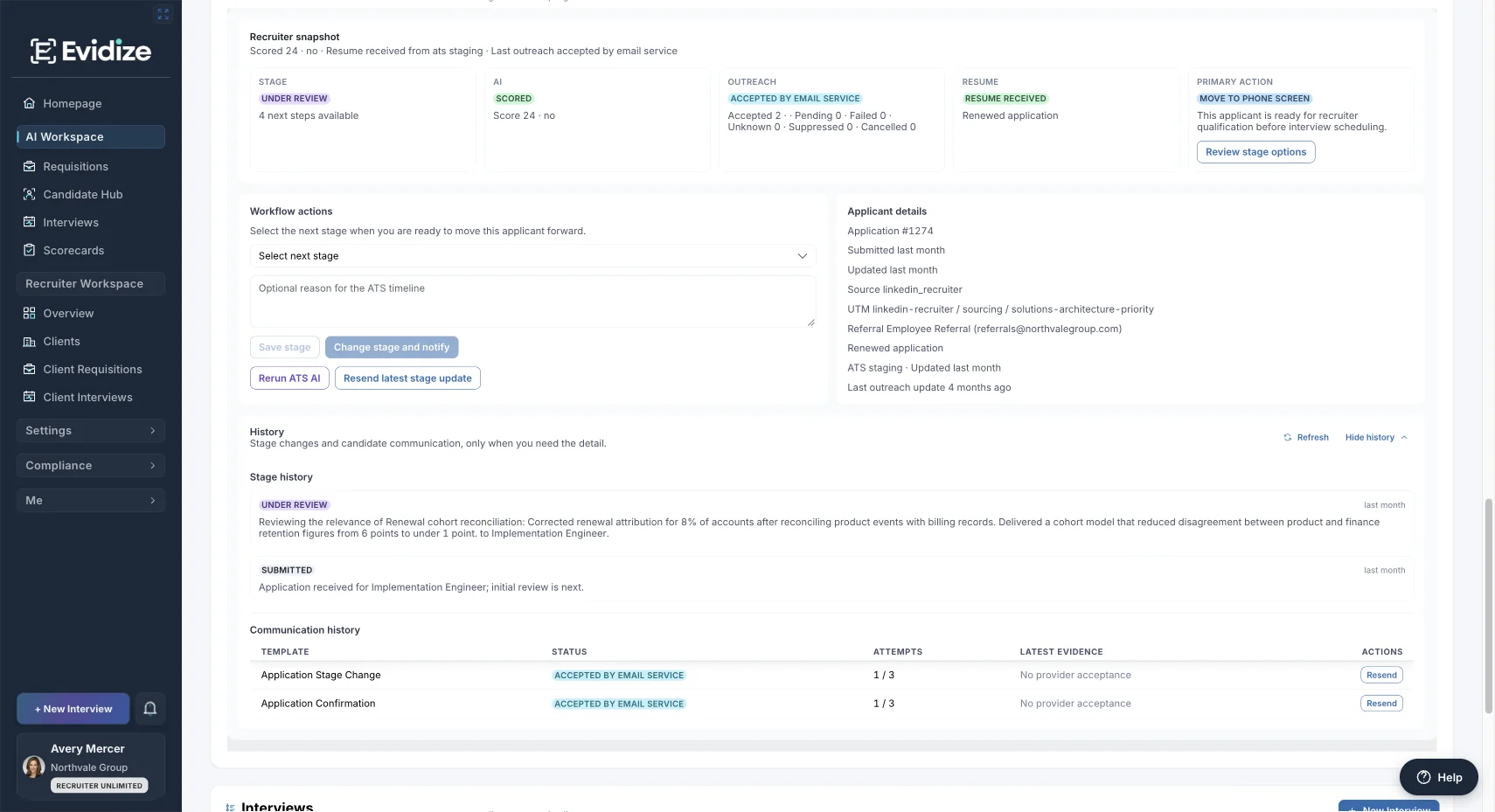
Open the applicant record to read stage reasons, timestamps, and message history before choosing a follow-up. Message status remains separate from the hiring decision.

What to check: “Accepted by email service” records a handoff to the email service. It does not establish inbox delivery or that the candidate read the message.
Applicant outreach status marked Accepted by email service with counts for other delivery states
Open full-size product image
A focused communication-status view from the applicant record. The full record also includes stage history and permitted follow-up actions.
Request an applicant-workflow demo Explore a prepared example. Your own workflow is optional.

Clear ownership

Your team owns the next step.

Fit summaries and suggested next steps support review. They do not establish a candidate’s ability or make an employment decision.

Plan the responsibilities around the product.

  • Public ATS workflows and AI analysis depend on plan access, permissions, and available credits.
  • Organization email requires a configured and verified connection. Email-service acceptance is not proof of inbox delivery or reading.
  • This is Evidize’s built-in applicant workflow. Connections to another ATS depend on your setup and are not implied.
Compare plan access

Before you decide

Questions to resolve before rollout.

Can we use our own careers branding?

The careers settings include the organization logo, primary and accent colors, visible job details, and an optional employer privacy notice link. Desktop and mobile previews help you review the configuration.

Does every role need screening questions?

No. Screening questions are requisition-specific and optional. A role can collect a résumé without adding a screener; where questions are used, the hiring team configures them for that role.

Can we see what happened to an application?

The applicant review includes recorded stage changes and communication history. Reviewers can inspect the available reasons, timestamps, message statuses, and permitted follow-up actions without reconstructing the history from separate notes.

Will an AI score automatically reject an applicant?

No. Available fit evidence informs review, while authorized people choose the applicant’s next stage and employment outcome. Missing information remains something to verify.

Keep the context connected

A prepared applicant workflow

See your applicant workflow from careers page to review.

Follow a prepared role from the careers preview to applicant review and communication history. Sharing an open role of your own is optional.