Structured interview scorecards

Compare candidates more consistently. Run clearer debriefs.

Give interviewers role-specific questions and shared scoring guidance, so candidates are easier to compare and debriefs start from the same record.

  • Role-specific interview questions
  • Shared scoring guidance and follow-ups
  • One record for the team debrief

Support consistent interviews and team-led debriefs.

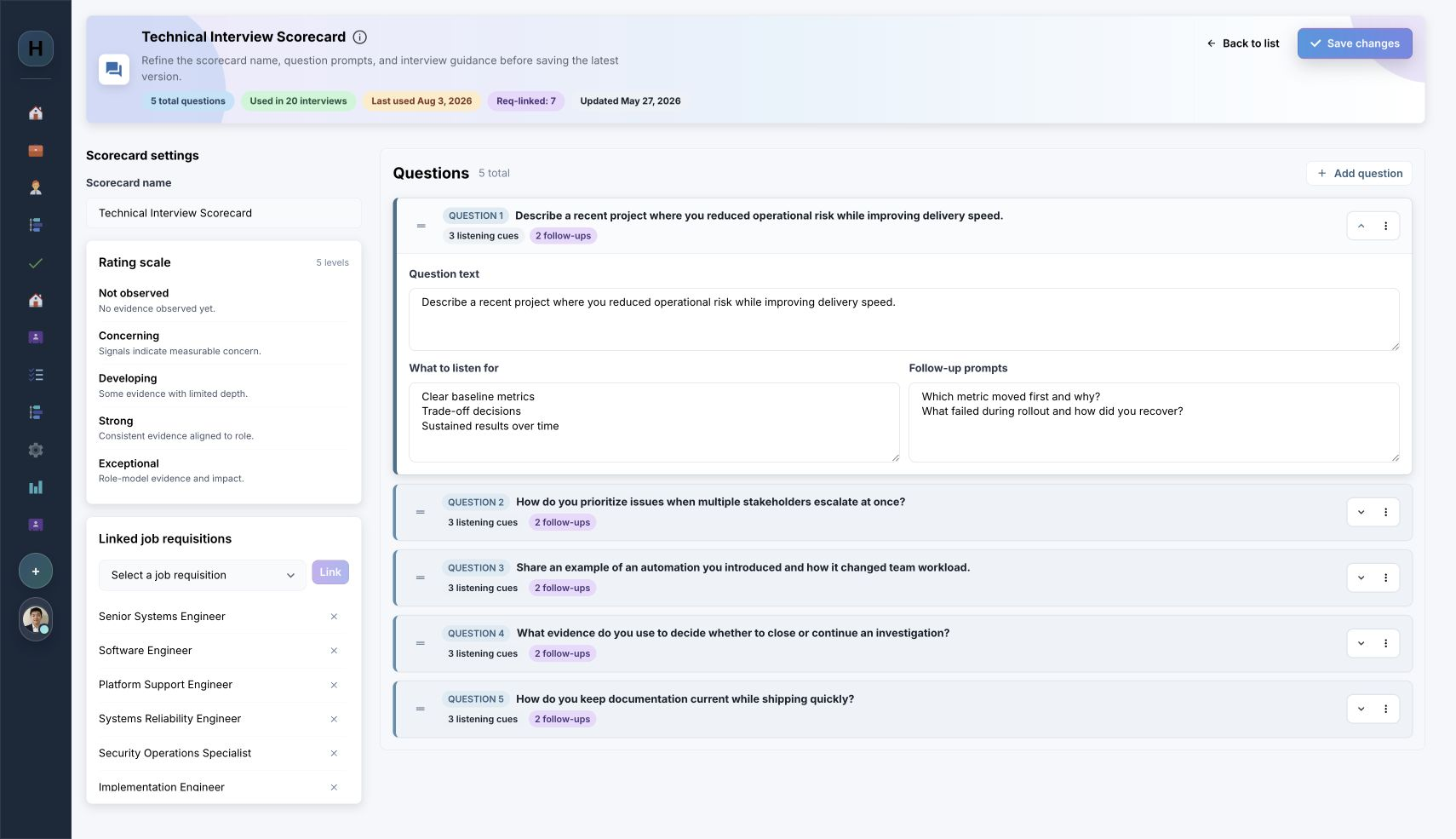
Scorecard template showing five role-linked questions, a shared rating scale, listening cues, follow-up prompts, and linked requisitions

Outcome 1 of 2

Give every interviewer the same plan.

Start with five role-linked questions, one shared rating scale, and a saved template the whole team can use.

Outcome 1 of 2: Give every interviewer the same plan.. Start with five role-linked questions, one shared rating scale, and a saved template the whole team can use.

Full product view

Give every interviewer the same plan.

Start with five role-linked questions, one shared rating scale, and a saved template the whole team can use.

Starting point
Role-specific interview plan
Shared approach
Questions + scoring guide
Interview record
Ratings + notes
Decision owner
Your hiring team

More consistent interviews

Replace scattered impressions with a shared interview plan.

Replace memory and disconnected notes with shared questions, ratings, and notes for the debrief.

Role-specific guidance helps interviewers probe relevant outcomes and trade-offs before review.

  1. Compare candidates more consistently

    Start the debrief from the same questions, ratings, and notes.

  2. Support interviewers on specialist roles

    Show the outcomes and trade-offs worth probing, even in specialist roles.

  3. Make the debrief easier to run

    See what was covered, what remains unclear, and where to follow up.

From role context to debrief

Turn one role into a clearer interview and debrief.

Prepare together, interview consistently, and review the same record.

  1. 01 · Define Hiring team Agree on what the interview needs to learn.

    Shape questions around the role brief and success goals.

    Role-specific questions
  2. 02 · Prepare Interview lead Review and tailor the scorecard before the interview.

    Fit questions, scoring guidance, and follow-ups to the role.

    Shared scoring guide
  3. 03 · Interview Interviewer Ask, probe, and record what matters.

    Use shared guidance and follow-ups while the conversation is fresh.

    Listening cues and follow-ups
  4. 04 · Review Hiring team Start the debrief from one completed record.

    Review questions, notes, ratings, and open points together.

    Ratings, notes, and summary

See it in action

See how a shared interview plan supports the conversation and debrief.

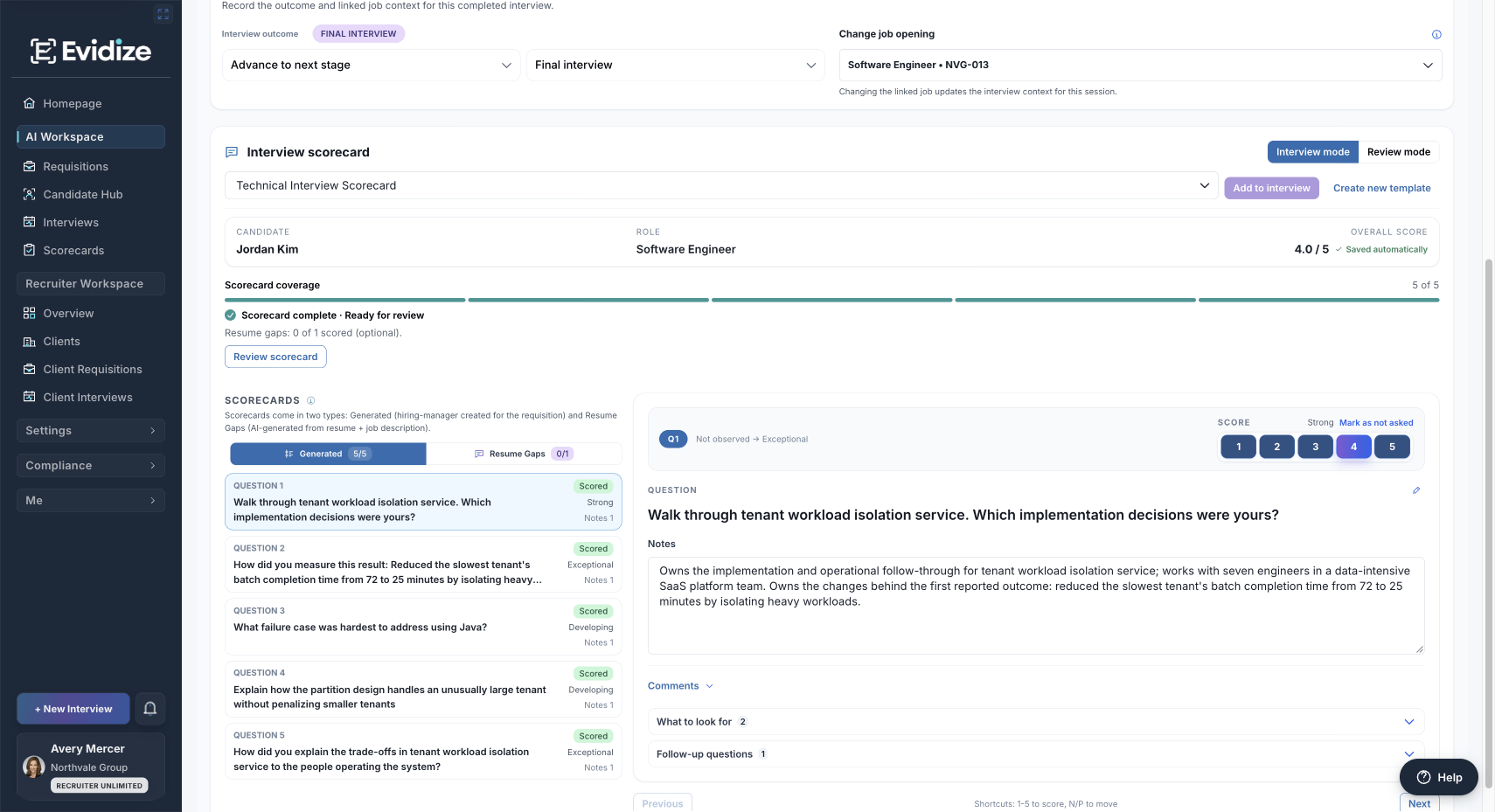
Scorecard template showing five role-linked questions, a shared rating scale, listening cues, follow-up prompts, and linked requisitions

Outcome 1 of 2

Give every interviewer the same plan.

Start with five role-linked questions, one shared rating scale, and a saved template the whole team can use.

Outcome 1 of 2: Give every interviewer the same plan.. Start with five role-linked questions, one shared rating scale, and a saved template the whole team can use.

Full product view

Give every interviewer the same plan.

Start with five role-linked questions, one shared rating scale, and a saved template the whole team can use.

Your team stays in control

Scorecards support judgment. They do not replace it.

Scorecards organize reviewer-entered questions, ratings, and notes. They support human review but cannot eliminate bias, validate every answer, predict performance, or make a hiring decision.
  • Review suggested questions and guidance for relevance, fairness, accuracy, and accommodation needs.
  • A score summarizes reviewer-entered ratings; it is not an objective measure or an automatic recommendation.
  • Your authorized team resolves disagreement and controls every hiring outcome.
Review the AI decision boundary

Plan your evaluation

What buyers ask before standardizing interviews

Clear answers on preparation, specialist roles, and interviewer adoption.
Can we edit the generated scorecard?

Yes. Reviewers can tailor the questions, scoring guidance, follow-ups, and order before the interview.

How does a scorecard become role-specific?

The first draft can use the role brief, success goals, and team context. Your hiring team decides what belongs in the interview.

Can scorecards help interviewers assess specialist roles?

They can make the outcomes, metrics, trade-offs, and follow-ups worth probing clearer. They do not replace qualified specialist review when it is required.

Do interviewers need to change how they run interviews?

They can keep their conversation style while using a shared plan. Start with one role, review it together, and adjust before a wider rollout.

Bring one of your hardest-to-assess roles

See the interview plan your team could use next.

Bring a real role. We will show how tailored questions, shared scoring guidance, and focused follow-ups can support a clearer debrief.